

Your money is easier to plan when you know what must leave before the month begins. To manage money without complicated budgets, review your bank and credit card statements from the previous 1-2 months, list regular bills, then decide what can go to savings and flexible spending. A simple monthly plan can use 50% of income for needs, 30% for wants, and 20% for savings or debt repayment, with room to adjust those shares to fit your life.
You don’t need to track every purchase to feel more in control. A clear picture of regular expenses can help you choose how much to save while leaving room for changing plans.
This article explains how to track recurring costs, build an emergency fund, automate savings, and create a flexible monthly spending plan. The goal is a steady routine you can maintain, not a system that makes everyday decisions harder.
Key Takeaways
- Use recent statements to spot recurring costs and catch charges that no longer belong in your monthly plan.
- Build an emergency cushion gradually, choosing a starting target that feels manageable and adding to it regularly.
- Set a recurring transfer for payday so saving becomes part of your routine rather than a decision you have to revisit.
- Give needs, wants, and savings their own place in your plan, then adjust the amounts when your month changes.
1. Building an emergency fund
Start with a separate savings goal for emergencies, not a vague intention to save whatever remains. A practical starter target is $500 to $1,000. Set a regular contribution that fits your income, then add to it when you can. Even a modest deposit helps make saving a repeatable habit. Keep this money for urgent needs, such as an essential repair or an unexpected bill, rather than planned purchases.
After reaching your starter target, work toward an emergency fund covering 3-6 months’ worth of expenses. Use your essential monthly costs to estimate the goal, including housing, food, utilities, transport, and required credit payments. If your income changes from month to month, base the plan on a conservative estimate rather than your highest-earning period. Long-term savings goals, such as a future move or education, should have separate targets so an emergency doesn’t derail them.
What are the best free budgeting apps in the United States? Choose a free app that makes expenses and savings goals easy to review. A notebook or spreadsheet can work just as well: the best tool is the one you’ll keep updating. What are common risks of budgeting apps and linking bank accounts? Linked accounts can expose sensitive financial information, while automatic categories or balances may be incomplete or delayed. Review transactions yourself, or track them manually if you’d rather not connect an account.
Keep the routine simple: check your emergency savings when you review your regular spending, then adjust the contribution if your bills or income change. How much should I keep in an emergency fund? Build toward 3-6 months’ worth of expenses, starting with $500 to $1,000 if that feels more reachable. If you’re in the United States and facing immediate difficulty meeting basic needs, call 211 for a local directory of government and nonprofit assistance services. That support is separate from savings, and can help address urgent needs while you work on your fund.
2. Setting up automatic savings transfers
Choose an amount you can set aside after income arrives, then schedule a recurring transfer. Setting it for each payday makes saving part of your routine. If your income varies, start with an amount that works in a lower-pay period. Adjust the transfer when your income or essential costs change instead of relying on a fixed guess.
A small contribution can keep the habit moving. Setting aside $20 per month adds to savings over time, and the amount can grow when your finances allow. Keep the transfer separate from money set aside for groceries, rent, and other near-term payments. That makes it easier to see what remains available for everyday spending.
Automatic payments can also help with debt repayment. Choose a regular amount to pay toward a credit card balance or other debt, and schedule it around payday. Leave enough in your account for bills due before your next income arrives. If savings and debt payments compete for the same money, split the amount according to your current priorities and review that balance as circumstances change.
Investing can also be part of an automated plan, but keep it distinct from emergency savings. For example, a budgeting plan might direct $200 each month to an investment account. Set the transfer only after accounting for upcoming expenses and your savings needs. The amount and timing should fit your cash flow, not an ideal month that rarely happens. A clear view of recurring commitments can help you choose a workable transfer; use a simple view of upcoming expenses to keep those dates in sight.
3. Creating a flexible monthly spending plan
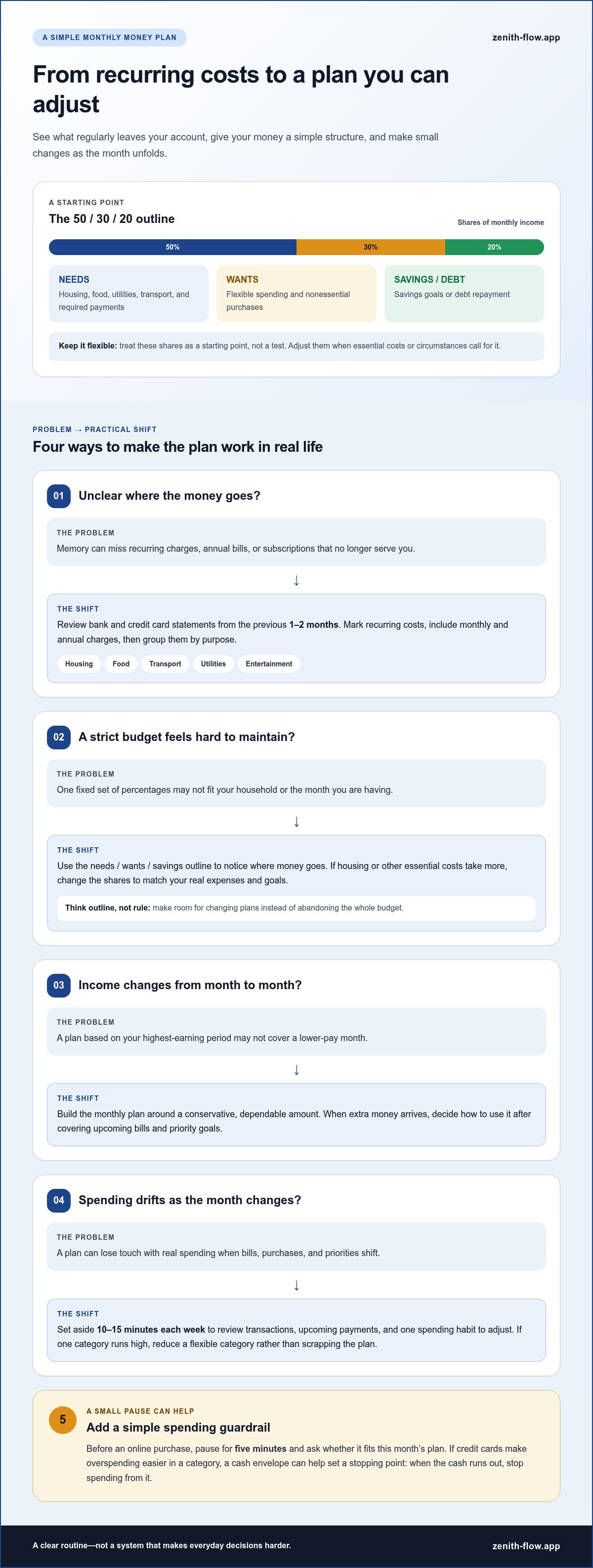
Start with a monthly outline, not a strict limit for every purchase. The 50/30/20 rule assigns 50% of income to needs, 30% to wants, and 20% to savings or debt repayment. Treat those shares as a starting point, not a test. If housing or other essential costs take more, adjust the percentages to fit your circumstances. For example, with $3,000 monthly income, setting aside $300 for savings and investing equals 10%.
How does the 50/30/20 rule work, and what are its limits? It divides income among needs, wants, and savings or debt repayment, but the percentages may not fit every household. Use them to notice where money goes, then change the shares to match your real expenses and goals.
If your income is irregular, estimate conservatively and build your monthly plan around a lower, dependable amount. When extra money arrives, decide how to use it after covering upcoming bills and priority goals. To track spending with bank alerts or a simple app, turn on transaction notifications and compare them with your account activity. Group purchases into a few categories, such as groceries, transport, and eating out, rather than tracking every detail.
Use a debit card if spending from your available balance helps you stick to your plan. If credit cards make it easier to overspend in a particular category, try a cash envelope and stop spending from it when the cash runs out. Before an online purchase, pause for five minutes and ask whether it fits this month’s plan. A brief pause can interrupt impulse buying and help you consider a lower-cost option.
Set aside 10-15 minutes each week for a money check-in. Review transactions, upcoming payments, and one spending habit you want to adjust; then update your plan for the rest of the month. If groceries ran higher than expected, reduce a flexible category rather than abandoning the whole plan. Small changes keep spending aligned with the month you’re actually having.
4. Listing and estimating regular expenses
Start with bank and credit card statements from the previous 1-2 months. Mark recurring costs, then group them by purpose: housing, food, transport, utilities, and entertainment. Include charges billed monthly and annually. This tracking reveals patterns that memory can miss, such as a subscription that no longer serves you or a bill that arrives only once a year. Keep the list simple enough to update when a paycheck or bill changes.
Use the Oregon budgeting example to see how estimates fit together. Monthly expenses total $2,700, including $1,400 for rent, $400 for groceries, and $200 for car insurance. Add your own regular costs, then compare the total with your income. The difference shows what remains for savings, flexible spending, or debt payments. If the total leaves little room, review each category for costs you can reduce or remove.
Annual charges need a place in your monthly plan too. Divide each annual expense by 12 and set that amount aside each month. For example, if a yearly bill is due, saving a portion from every paycheck spreads its effect across the year instead of leaving one month unexpectedly tight. Keep the amount in your expense list, even if the payment date feels far away.
Separate fixed costs from expenses that vary, such as groceries or entertainment. For variable categories, estimate from recent statements, then compare the estimate with actual spending during your next monthly review. Update it when your habits or obligations change. This small check can reduce stress by showing which costs are predictable and where you have room to adjust. To keep recurring costs visible alongside upcoming payments, track your regular expenses in one place.
Zenith Flow: Zenith Flow
Zenith Flow helps you see what you can spend after accounting for upcoming commitments and savings. It’s useful when a list of regular expenses and a flexible monthly plan still leave you unsure what’s truly available. The app includes recurring expense management in In Arrivo, Il Disponibile, and the Indice Zenith, plus four free widgets. Together, these features show upcoming costs and spending room in one place, helping you make everyday choices with a clearer picture.
Zenith Flow’s essential features are free. Zenith Flow Plus unlocks with a one-time payment, with no subscription. Plus includes the Simulatore Plus, which lets you explore how possible changes may affect your available spending. You stay in control of your plan; the app makes its moving parts easier to follow.
Visit zenith-flow.app to explore Zenith Flow.
Make your next money decision easier
A practical way to manage money without complicated budgets is to give your routine one clear purpose: help you make the next decision with less guesswork. You don’t need to get every choice right before you begin. Start by noticing what feels unclear, then make one adjustment that gives you a steadier view of your money. Keep the process useful, not burdensome. If your circumstances shift, let your approach shift with them.
As you build the habit, a clear view of upcoming commitments can make everyday choices easier to weigh. Zenith Flow helps you see what’s available after planned expenses and savings, so you can follow your own spending plan with greater clarity.
Explore Zenith Flow and take the next step at a pace that works for you. A calmer approach can begin with one thoughtful choice.
Frequently Asked Questions
First Things First: Where is My Money Going?
Start by sorting recent transactions into essentials, flexible purchases, and occasional costs. Add a brief note beside unfamiliar merchants so you can identify them later. To manage money without complicated budgets, look for patterns instead of logging every detail, such as repeated convenience purchases or charges that no longer serve you. Then choose one change based on your actual spending.
Why Track Your Spending?
Tracking turns the vague feeling that money disappears into useful information. It can show whether an expense is a one-off or a recurring habit, helping you choose a practical adjustment. For example, if small purchases cluster around busy workdays, planning meals or errands ahead may address the cause better than setting a spending limit you can’t maintain.
What are simple ways to manage money without a detailed budget?
A simple way to manage money without complicated budgets is to keep a brief record in a notebook, spreadsheet, or banking app. Label purchases in plain language, then review them before making a larger optional purchase. You don’t have to plan every dollar in advance; a short record can help you notice your choices and make adjustments without turning daily spending into a chore.
How can I automate savings and bill payments?
Write down each bill’s due date and compare it with your income dates. Schedule recurring payments to cover essential bills while leaving enough for everyday needs. Set a separate recurring transfer for savings, and review the schedule whenever a due date or payday changes. A calendar reminder can help you spot timing conflicts before they disrupt your plan.
How can I prioritize paying off debt while saving money?
Keep required debt payments current, then decide how to divide extra money between a cash reserve and additional debt payments. Compare interest rates and balances to choose which debt to target first, while keeping accessible savings for near-term surprises. After an unexpected car repair, for example, you might rebuild your cash cushion before increasing extra payments again.
What is a zero-based budget, and is it more complicated than a spending plan?
A zero-based budget gives every dollar of income a purpose, so income minus expenses equals zero. It is more detailed than a flexible spending plan, which doesn’t require you to track every purchase.

