

The higher balance isn’t always the money you can spend. Your available balance is generally the amount you can use now, after pending payments and account holds are taken into account. Your current, or bank, balance may not reflect those deductions yet. That’s why available balance vs. bank balance can show two different figures.
That difference can feel unsettling, especially when a debit card payment seems to have gone through but your account still shows the old balance. The gap usually reflects timing, not missing money: an authorization hold can reduce what’s available before the payment fully posts.
Here, you’ll learn what each balance means, how debit card holds affect the figures, and which one to use when deciding whether you can spend. You’ll also see why the numbers may match again once transactions finish processing, helping you read your account with more confidence.
Key Takeaways
- Use the available figure to judge what you can spend now; pending payments and holds can make it lower than your current balance.
- A debit card authorization can temporarily set aside funds before the final charge appears in your account activity.
- Once pending transactions post or holds are released, the balance figures can change, so timing matters when you plan a payment.
- Zenith Flow helps you see what you can spend after upcoming commitments and savings are considered.
Why is my available balance different from my current balance?
Pending transactions can change the funds you can use before your bank account’s posted balance catches up. The difference usually comes down to timing: payments, account holds, and deposits can be at different stages of processing.
Pending Transactions and Account Holds
A pending transaction is a payment or deposit still processing, while a hold temporarily sets funds aside. Both can change what you can spend before the transaction appears as completed activity. For example, a $20 debit card purchase from an account with $200 can leave $180 available while the purchase is pending. The current or ledger figure may not yet show the final debit.
This matters because a higher posted balance doesn’t necessarily mean all those funds are free to use. Holds can also apply to check deposits, particularly larger ones, while the bank verifies the funds. If your balance seems off, compare pending transactions with posted activity and see whether a hold explains the difference.
Transfers and Check Deposit Availability
A pending transfer is money moving between accounts that has not finished processing. An outgoing transfer may reduce what’s available before it appears in posted activity; an incoming transfer may not be spendable until the bank makes it available. Most bank transactions process within 24-48 hours, though some take longer depending on the merchant and bank policies.
There’s no single check-deposit timeline that applies to every deposit. Banks may hold a check, particularly a large one, while verifying funds with the issuing bank. The amount and verification process affect when the funds become available. If a deposit seems delayed, review its status and any hold shown in your account.
Negative Available and Positive Current Balances
Yes. Your available balance can be negative while your current balance remains positive if pending payments and holds exceed the funds currently available. For example, a positive posted balance may sit alongside several pending card purchases or a deposit hold. The available figure reflects those temporary claims, while the current figure may not yet include them.
If the available balance looks incorrect, compare each pending transaction, transfer, and hold with your receipts and records. Look for a duplicate or unfamiliar amount, then report the specific discrepancy to your bank. This helps distinguish a processing delay from an error that needs attention.
Debit card authorization holds
A debit card authorization can reserve funds before the final payment posts. That temporary hold changes how much you can spend, even while account activity may still show an earlier figure.
Effects of Holds on Spending
A debit card hold temporarily reduces the available balance, but may not change the current balance until processing finishes. It matters because money set aside for one purchase can’t cover another payment at the same time. For example, a restaurant may place a $50 hold for a $30 meal to allow for a tip. The final charge can differ from the amount first reserved.
That difference can affect your plans if you rely on the higher current balance. A pending hold may leave less available for other debit card payments, even if the purchase looks small. If several transactions overlap, the total reserved can reduce your spending room and contribute to an overdraft if later payments exceed available funds.
Balance Used for Purchase Approval
Banks use your available balance to determine whether to authorize a debit card purchase. At checkout, the relevant figure is the amount currently available, not simply the larger figure that may appear as your current balance. A pending payment or hold can therefore affect whether another transaction is authorized.
For example, if a hold has already set aside funds, a new purchase may be declined even when the current balance looks sufficient. Approval depends on the funds available when the bank receives the authorization request. Keep that distinction in mind before relying on your displayed current balance to make another payment.
Duration of Holds and Pending Transactions
Debit card transactions and authorizations may take a day or two to clear. During processing, a hold can continue to reduce your available balance, while the current balance may not change until the transaction is fully processed. This timing can leave the figures temporarily out of step.
Once the payment posts, the hold is replaced by the completed transaction. If the final charge differs from the amount reserved, the available balance adjusts to reflect the posted amount. For example, after a $20 debit-card authorization posts, both balances are $30, assuming no other transactions occurred. Until then, use the lower available figure to judge what you can spend.
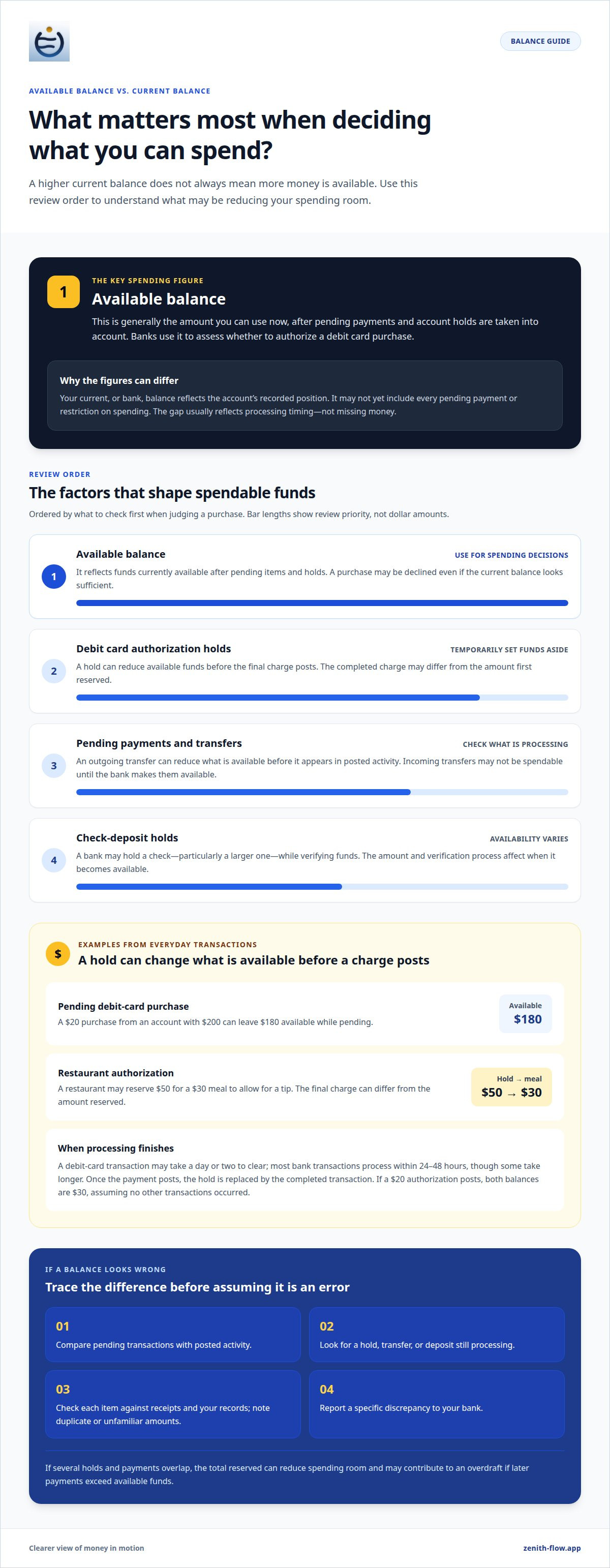
How available and current balances differ
The difference comes down to timing and purpose. One figure shows the account’s recorded position; the other helps show what you can use now.
Meaning of the Current Balance
The current balance is the amount shown for your bank account, including posted activity and, depending on the bank’s display, transactions still processing. It gives you a snapshot but may not show every restriction on spending. A pending card payment, for example, can affect available funds before the final transaction appears in posted activity.
Banking systems may update these figures at different times. A ledger balance reflects transactions officially posted by the end of a business day, while available funds can change during the day. A bank may also make a deposit available before it officially posts. That’s why a statement balance for a particular date can differ from the amount currently available.
Balance Used to Assess Overdraft Fees
No single displayed balance, by itself, explains every overdraft fee. A bank may charge an overdraft fee when it pays a check that overdraws an account, or a non-sufficient funds fee if it returns the check. What matters is whether the transaction is paid or returned and how it affects the account.
For spending decisions, the available balance is the more useful guide because it accounts for funds being held. The current balance can look higher while payments are still processing. For instance, a bill may appear as pending while the account display still reflects an earlier amount. If the bill later posts, the account’s position changes. The earlier figure didn’t mean those funds were free to spend.
Use the two figures for different purposes: the current balance helps you follow recorded account activity, while the available balance helps you judge your spending room. If they differ, check pending payments, deposits, and holds first. These entries can show whether the gap reflects timing or a completed transaction. Reviewing account activity alongside both figures gives you a clearer picture before you make another payment.
Meaning of available balance
Your available balance is the amount in your account that you can access immediately. It gives you a more practical view of spending room than recorded activity alone.
What the Available Balance Represents
This figure reflects funds ready to use after the bank accounts for relevant pending transactions and holds. That distinction matters when a deposit appears in your account but some funds remain unavailable. A check deposit, for example, may be held while the bank verifies it. The displayed account total may therefore differ from the cash you can spend.
Think of it as a working figure, not a record of every dollar connected to your account. Recorded accounts receivable, for example, may appear in financial records but aren’t cash you can access immediately. For a household budget, use the available figure before making a payment, then account separately for upcoming expenses that haven’t reached the bank yet.
How Banks Calculate Available Balance
Banks generally start with the previous banking day’s ending ledger balance, then adjust for pending transactions and account holds. In other words, the amount combines posted funds with current adjustments that affect access. Deposits and withdrawals can change the figure as they are processed, while a hold can temporarily set money aside.
For example, if the ledger and available balances are both $50 on Monday, a pending debit can change the amount available before the debit posts. Once transactions post or holds are released, the figures may align again. If there are no pending transactions or holds, the available and ledger balances may be the same.
Use this amount as a guide to what you can spend now, not as a promise that all future payments are covered. A check you’ve written may not yet have been presented for payment, so it might not appear in the calculation. Before spending, compare the available figure with your own list of checks, scheduled withdrawals, and near-term bills. This helps account for obligations the bank hasn’t processed.
Zenith Flow: Zenith Flow
Zenith Flow helps you plan what you can spend after accounting for upcoming commitments and savings. It doesn’t replace your bank’s available balance; it adds a broader view of money set aside for recurring expenses and goals.
Use it when you want to look beyond pending card transactions and organize future obligations. Zenith Flow includes recurring-expense management and a figure showing what you can spend. Its essential features are free forever, while Zenith Flow Plus unlocks additional features with a one-time payment and no subscription.
If you’d like to bring upcoming expenses into your spending picture, visit Zenith Flow.
Make Your Next Money Check-In More Useful
Make your next account review about more than what cleared today. Regularly comparing the funds you can use with commitments you’ve already planned can make spending decisions easier. Understanding available balance vs. bank balance is one part of the bigger picture: what’s free to spend now, and what already has a purpose.
Choose a regular moment, such as when you review household bills, to note recurring expenses and planned savings alongside everyday spending. Keeping those obligations in view can help give each new decision a clearer place in your routine. Adjust the routine as plans change, rather than treating a glance at your account as your whole financial picture.
If you’d like a simple place to organize that broader view, visit Zenith Flow.
A little structure can make your next money decision more deliberate.
Frequently Asked Questions
What Is a Ledger Balance?
A ledger balance is the amount from transactions officially posted to your account by the end of a business day. It excludes transactions that are still pending. For example, a card payment made late in the day may not appear in that day’s ledger balance. The balance on a statement for a specific date reflects the ledger balance for that date.
What is the difference between available balance and current bank balance?
Your current bank balance shows the account amount, including transactions that may still be processing. Your available balance reflects funds accessible for spending after relevant holds and pending activity are considered. Put simply, the difference between available balance and bank balance can be money that appears in the account total but isn’t ready to use. Review pending activity to understand the gap.
What transactions can make available balance differ from bank balance?
Debit card authorizations, pending transfers, and deposits under a hold can create a difference. For example, a fuel-station card authorization may reserve funds before the final charge posts. An incoming transfer can also appear in account activity before it’s available to spend. The timing and processing status of each transaction determine how it affects the two displayed amounts.
How can I find pending transactions and holds in my bank account?
Open your bank’s app or online account and review transaction activity for labels such as “pending” or “processing.” Then compare each entry with receipts, transfer records, or deposit details. Check the balance or account details section for any separate holds. If an entry is unfamiliar or the displayed amount still doesn’t match your records, ask your bank about that specific transaction.


