

A practical starting point for how much money you can safely spend in retirement is the 4% rule: withdraw 4% of your portfolio in the first year, then adjust the amount for inflation in later years. With a $1 million portfolio, that means $40,000 in the first year. The rule is built around a 30-year retirement, so it offers a reference point, not a complete spending plan.
Wanting a clear number makes sense, especially when a major purchase could affect your comfort for years. But your portfolio balance alone doesn’t tell you how much money you can safely spend. Reliable income, essential expenses, taxes, timing, and your flexibility to adjust all matter.
This article explains what the 4% rule can tell you, where its assumptions matter, and how to weigh a major expense against future flexibility. You’ll also see how to separate committed money from spendable funds, so a purchase fits into the wider picture rather than resting on one reassuring-looking balance.
Key Takeaways
- Count reliable income, such as Social Security or a pension, alongside portfolio withdrawals when thinking about retirement spending.
- Treat the 4% rule as a starting point, and consider how retirement length, inflation, and market conditions affect its usefulness.
- Before a major purchase, weigh its immediate value against the flexibility you may want later.
- Separate money already committed to bills and essentials from funds you can spend without disrupting your plans.
The 4% Rule: How Much Can You Spend in Retirement?
The 4% rule offers a retirement spending framework, not a personal spending limit. Your income, expenses, and planned choices also shape what feels sustainable.
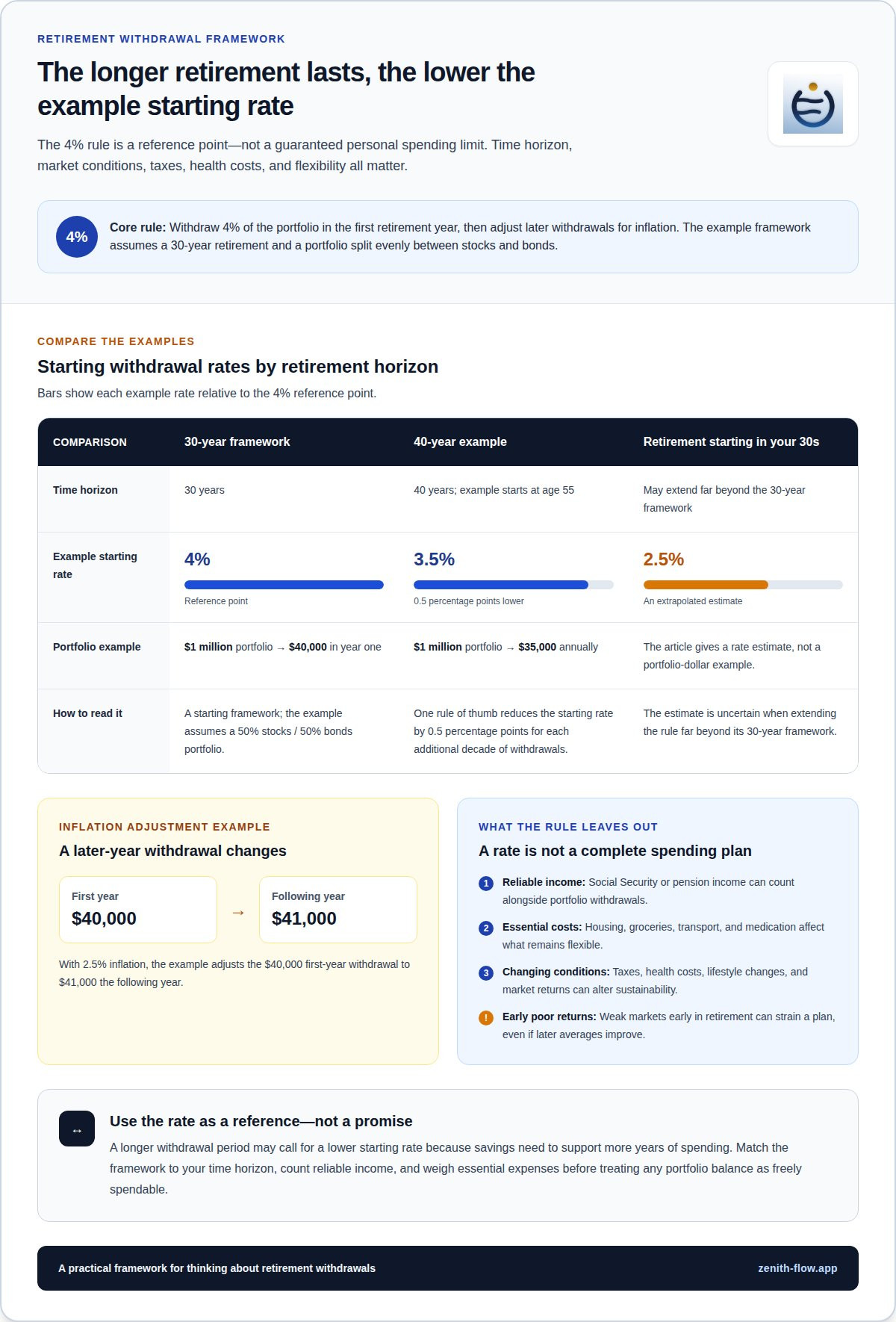
Under the rule, you withdraw 4% of your portfolio in the first retirement year, then adjust withdrawals for inflation. Its example assumes a 30-year retirement and a portfolio split evenly between stocks and bonds. It can help frame the question of how much money you can safely spend, but it doesn’t account for every tax, health, or lifestyle change. Poor market returns early in retirement can also strain a plan, even when long-term averages look adequate.
Matching Available Balance to Expected Income
Available balance means spendable money in checking, cash, and similar funds; expected income counts only when its arrival is certain. This distinction helps keep bills and savings commitments from being mistaken for extra spending money. In retirement, Social Security and pension income can work alongside portfolio withdrawals to cover essential expenses. A retiree who needs $50,000 annually and receives $10,000 from Social Security would withdraw $40,000 annually from the portfolio in that example.
Setting Spending Limits and Tracking Balances
An income-loss fund gives you room to meet expenses when income stops or changes; a commonly suggested reserve covers 3-6 months of living expenses. If your income varies month to month, base spending on money already available and income certain to arrive, then subtract upcoming commitments and your buffer. The 50/30/20 budgeting rule can organize take-home pay: 50% for needs, 30% for wants, and 20% for savings and debt down payments.
Under this rule, minimum loan or credit-card payments count as needs, while debt payments above the minimum count as savings. Interest and required payments reduce what’s left for other choices, so include them in your commitments. To track a safe-to-spend balance in an app or spreadsheet, add available funds and certain expected income, then subtract bills, essential spending, savings transfers, debt payments, and your buffer. A negative result means your commitments exceed available funds. Tax-aware retirement planning also considers where income comes from, since taxes can affect how much remains to spend.
The 4% retirement withdrawal rule
The 4% rule is a starting framework, not a fixed answer for every retirement. Your time horizon and spending choices affect how long savings may need to last.
Applying the Retirement Withdrawal Rule
The rule begins with withdrawing 4% of a retirement portfolio in its first year, then adjusting later withdrawals for inflation. Its example assumes a 30-year retirement and a portfolio invested 50% in stocks and 50% in bonds. With 2.5% inflation, a $40,000 first-year withdrawal becomes $41,000 the following year. This approach gives you a reference amount, but not a guarantee.
Adjusting for Longer Retirement Time Frames
A longer retirement may call for a lower starting withdrawal rate because savings must support more years of spending. One rule of thumb reduces the rate by 0.5 percentage points for each additional decade of withdrawals. For a 40-year retirement starting at age 55, the example uses $35,000 annually from a $1 million portfolio, or 3.5%. A longer horizon changes the amount available for today’s choices.
Why Safe Retirement Spending Varies
There is no universal safe amount because retirement length, market returns, taxes, health costs, and personal flexibility differ. Someone retiring in their 30s may need savings to last far beyond a 30-year framework. One estimate extrapolates a 2.5% withdrawal rate for that situation, while recognizing uncertainty in extending the rule that far. Poor returns early in retirement can also strain a plan, even if later averages improve.
Separating Essential and Discretionary Spending
Essential expenses include housing, groceries, transport, and medication; discretionary spending covers choices you can reduce. A common budgeting guide assigns 50% of take-home pay to needs, 30% to wants, and 20% to savings and debt payments. It’s a guide, not a retirement withdrawal rate. Before optional spending, account for essential expenses and planned savings; also consider how credit payments and interest affect your remaining dollar amount. A common retirement saving guideline is 15% of income.
Balancing present spending with future financial flexibility
Your bank balance shows what’s in an account, not what remains after upcoming commitments. A simple calculation can clarify how much you can actually spend.
To calculate a safe-to-spend amount, add available funds and certain income, then subtract bills, essentials, savings transfers, debt payments, and your chosen buffer. The remainder is available for flexible spending.
Calculating Spending Between Paydays
A daily spending limit divides the money left after bills and your buffer by the days until payday. That leaves $32 per day. This rule of thumb helps pace spending across the remaining days.
A negative result means committed costs and your buffer exceed your current balance before payday. Treat it as a signal to pause flexible spending and review payment timing, not to withdraw savings automatically. Update the calculation when a bill clears or certain income arrives. Otherwise, pending charges and automatic payments may make your displayed balance look higher than the amount you can use.
Balancing Checking, Savings, Needs, and Wants
Checking accounts are often used for near-term spending, while savings may be set aside for future needs or goals. Treating every dollar across your accounts as spendable can blur that distinction. Identify essentials first, then decide how much remains for wants without dipping into money already assigned to savings or upcoming expenses.
Your bank balance may include money already committed to rent, groceries, or transport, so it can overstate your spending room. Set a personal buffer: the amount you don’t want to spend below. If your income varies, base flexible spending on funds already available and count expected income only when its arrival is certain. This ties each purchase to the timing of your expenses, not just the total shown in your account.
Questions to consider before making large spending decisions
A major purchase can affect more than this month’s budget. Before spending, consider what the money is for, which obligations are coming up, and how easily you could rebuild your savings.
Assessing Large Spending Decisions
Before a large purchase, compare its cost with your essential expenses, upcoming income, and ability to adjust afterward. Start by asking: if you withdraw money from a portfolio, how quickly could you return to work and earn enough to cover the planned expense? If that path is uncertain, the purchase may limit your future choices more than you expect.
Next, distinguish the purchase’s lasting purpose from its immediate appeal. A necessary repair and an optional upgrade can have different consequences, even at the same price. Check whether paying from savings would interrupt a planned goal or leave too little for regular payments. Budgeting by percentage can offer a framework, but the right allocation depends on your commitments and income pattern. A paycheck arriving later won’t cover a bill due today.
Accounting for Irregular Expenses and Upcoming Bills
Upcoming bills and irregular expenses reduce your spending room because that money already has a purpose. Include known costs, such as an annual bill or scheduled repair, before treating the remaining balance as available. Otherwise, a purchase may seem affordable but leave you under pressure when those expenses come due.
For a clear view, list each upcoming bill, its due date, and the amount to set aside. Compare what remains with the purchase cost and your minimum essential expenses. If the purchase would use money needed for those obligations, delay it or choose a less expensive option. Before using investment savings, also consider whether your income could replace the withdrawn amount without disrupting future needs.
Before deciding, write down the purchase, the next bills, and the income expected before they’re due. Map a large purchase against upcoming expenses to see how it fits your wider budget.
Zenith Flow: Zenith Flow
Zenith Flow helps you see what you can spend after accounting for upcoming commitments and savings. The personal finance planning app calculates your available spending amount and tracks recurring expenses, so you can make a more informed decision before a large purchase.
Use it when a bank balance doesn’t show what’s already set aside for bills or goals. Zenith Flow works on iPhone, iPad, and Mac. Its essential features are free, and Zenith Flow Plus adds the Simulator Plus with a one-time payment and no subscription.
For a practical view of your money and upcoming expenses, visit Zenith Flow.
Make your next money choice with clarity
A spending plan is most useful when it helps you make choices that fit your life, not when it turns every purchase into a test. Treat a large expense as a decision about both what you gain now and how much flexibility you want to keep for later.
Review your plan when a bill, income source, or personal priority changes. A new recurring expense can affect what feels comfortable, just as changing goals can make a planned purchase more worthwhile. Keep the next step simple: name the expense, note what else the money may need to cover, and decide whether the trade-off still works for you.
Deciding how much money you can safely spend is ultimately about making a choice you can live with, today and over time. A clear view of your commitments can help you move forward without relying on a reassuring account balance alone.
For help keeping your spending picture organized, contact Zenith Flow to discuss your options. Take the next decision at a pace that feels steady and considered.
Frequently Asked Questions
What Is Safe-to-Spend?
Safe-to-spend money is what you can use without interfering with obligations you’ve already planned for. It differs from the balance shown in your account: a pending card charge, automatic payment, or bill due before payday may already claim part of that money. Before deciding whether a purchase fits, review recent transactions and the dates of upcoming payments.
How Much of My Paycheck Should I Save?
The right amount to save depends on your take-home pay, essential expenses, debt commitments, and savings goals. First decide what needs funding, such as retirement, an emergency reserve, or a planned expense. Then choose a regular contribution that fits after necessary payments, and review it when your income or costs change. A consistent amount that suits your circumstances is more useful than a target that puts basic bills at risk.
How do I give every dollar a job?
Assign your expected take-home income to specific purposes before treating any remainder as free to spend. List essentials, upcoming bills, debt payments, savings goals, and flexible spending categories. A zero-based budget is one way to do this: allocate the full amount across categories while keeping a buffer for timing changes. If your income varies, make assignments from money you’ve received rather than relying on an uncertain future payment.
How much can I spend today, really?
To decide how much money you can safely spend today, start with funds available now, then account for purchases and payments already committed. Check whether any pending transaction hasn’t appeared in your balance yet. Consider when income will arrive, not just how much you expect. If spending the remainder would leave an essential bill uncovered, wait until your cash position changes.
Okay, what should I save for?
Start with expenses that could disrupt daily life if the money isn’t ready: essential bills, unexpected costs, and obligations due soon. Then set aside funds for goals that matter to you, such as retirement or a planned purchase. Give each purpose its own place in your budget. That makes it easier to tell whether extra cash is genuinely unassigned or already earmarked for something coming up.
What does safe-to-spend money mean?
Safe-to-spend money is the portion of your available funds left for choices after accounting for commitments and the amount you want to keep untouched. It’s not the same as savings or your full account balance. For example, money set aside for a scheduled bill isn’t available for an unrelated purchase, even if it’s still in the same account today.


